Air Purifiers for Parrot Rooms: What to Check
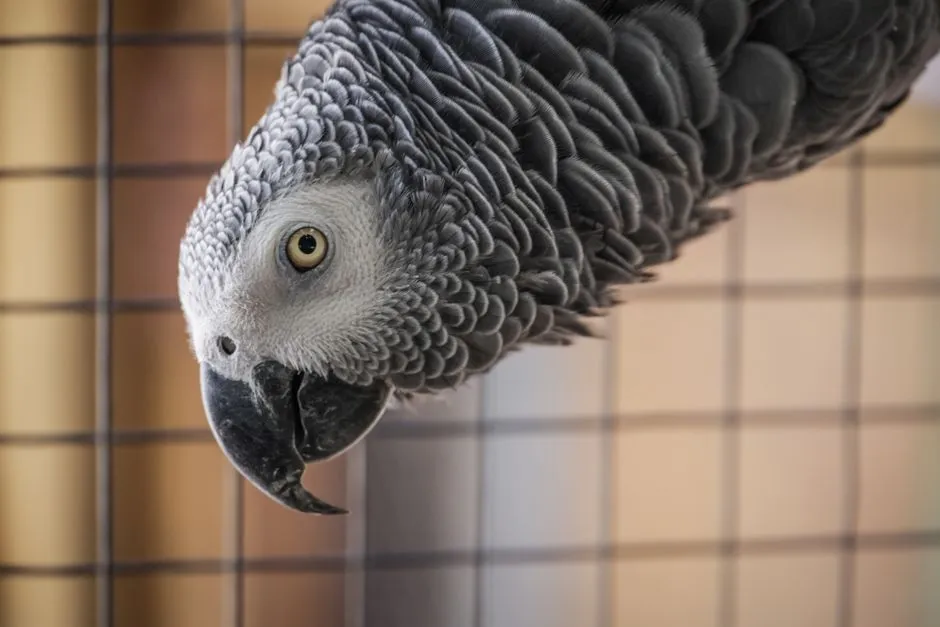
- What air purifier works for a parrot room?
- What problem should the purifier solve?
- Is HEPA the only specification that matters?
- Why should a parrot room avoid ozone generators?
- Can activated carbon make fumes safe?
- How should you size a purifier for the room?
- Where should the unit be placed?
- How do noise and airflow affect the bird?
- What upkeep should you budget for?
- How do you compare two models honestly?
- What can an air purifier never replace?
- Sources
What air purifier works for a parrot room?
Choose a mechanical particle filter with a documented Clean Air Delivery Rate (CADR) for the room, replaceable filters, enclosed moving parts, stable construction, and no intentional ozone generation. Check the exact model and every optional mode; ionizers, electrostatic systems, plasma features, and some ultraviolet designs may emit ozone. An air cleaner cannot make smoke, PTFE/Teflon fumes, sprays, or chemical vapors safe. Remove the pollution source, ventilate safely, and contact an avian veterinarian after suspected exposure.
This is a desk-researched buying framework, not a product test or brand ranking. Specifications change by model and market, so verify the current manual and certification record before purchase.
What problem should the purifier solve?
Name the pollutant before choosing a machine. Parrot feather debris, dried material disturbed during cleaning, outdoor smoke particles, odors, and chemical gases are different targets.
The U.S. Environmental Protection Agency says most air cleaners are designed for either particles or gases. Particle filters do not automatically remove gases. Gas media are designed for named gases or volatile compounds, and there is no widely used performance rating comparable to CADR for gas removal.
Use this distinction:
- Visible dust and airborne particles: compare particle CADR, filter type, room fit, and operating speed.
- Odor: remove and clean the source first. Odor disappearance does not prove that a harmful gas is gone.
- Smoke or outdoor particle events: control entry where practical, use appropriately sized particle filtration, and follow public-health and avian-veterinary advice.
- Cleaning, paint, pesticide, combustion, or appliance fumes: remove the bird from exposure and stop the source. Do not rely on a purifier as protective equipment.
- PTFE/Teflon fumes: treat suspected exposure as an emergency. PTFE/Teflon fumes can kill birds.
An air cleaner is one control in a clean-air plan. EPA says it cannot remove every pollutant and should supplement source control and ventilation rather than replace them.
Is HEPA the only specification that matters?
No. HEPA describes a particle-filter approach; it does not state how much cleaned air the complete device supplies in your room, how loud it is at the chosen setting, whether air bypasses the filter, or what other technologies operate inside it.
EPA recommends choosing a portable particle air cleaner with a CADR large enough for the room. CADR is a rate, normally expressed for particle categories under a standardized test. Compare the CADR at the speed you can actually run, not only a marketing room-size claim detached from airflow.
Record:
- exact model number and regional version;
- smoke, dust, and pollen CADR values where provided;
- the room area and ceiling height;
- rated speed associated with the claim;
- replacement-filter part number and availability;
- filter-change method and exposed-part controls;
- electrical rating and cord length; and
- every ion, plasma, ultraviolet, fragrance, or “active” mode.
Do not invent an air-change target from a generic chart. Use the current manufacturer rating and EPA sizing guidance, then verify placement and operation in the actual room.
Why should a parrot room avoid ozone generators?
Ozone generators intentionally add ozone to indoor air. EPA says not to use them in occupied spaces and reports that ozone at concentrations within public-health standards does not effectively remove many indoor contaminants. The California Air Resources Board says birds are especially sensitive to air pollutants, including ozone, and strongly advises against ozone generators in spaces occupied by people or animals.
Avoid any machine marketed primarily as an ozone generator, “activated oxygen” device, or shock-treatment purifier. Do not run one while the bird is elsewhere and assume a smell test proves safe return. EPA notes that lack of odor does not guarantee a safe ozone level.
Electronic air cleaners need closer review. EPA says electrostatic precipitators, ionizers, ultraviolet lights without adequate lamp coatings, and plasma air cleaners may have the potential to emit ozone. CARB classifies its certified devices as mechanical or electronic and explains that electronic devices may generate ozone within its regulatory limit.
CARB certification is useful for checking a model's ozone-emission category in California, but CARB explicitly says certification does not prove pollutant-removal effectiveness or that a model is universally safe. For a parrot room, prefer a model listed as mechanical filtration with no ionizer, plasma, electrostatic, or ozone function. Confirm the exact model number, not just the family name.
Can activated carbon make fumes safe?
No. Carbon or other gas media can be designed for particular gases, but a small dark sheet labelled “carbon” does not establish capacity, target gas, breakthrough time, or safe exposure. EPA says activated carbon can be effective when a large amount of material is used and notes the absence of a widely used performance rating for portable gas removal.
Do not use carbon as permission to clean, spray, paint, cook, smoke, self-clean an oven, or heat an unknown coating near a bird. The correct control is to prevent the pollutant at its source and move the bird to clean air before the activity.
For routine odors, find wet liners, spoiled food, retained debris, dirty bowls, damp porous parts, or another source and correct it. The bird-room cleaning guide gives the existing cage routine. Persistent odor or any respiratory concern belongs with an avian veterinarian and, where appropriate, a qualified building or HVAC professional.
How should you size a purifier for the room?
Measure the enclosed room the unit will serve. Record length, width, ceiling height, permanently open doorways, and whether the door will stay shut during normal operation. Compare those conditions with the manufacturer's CADR and room-sizing method.
EPA's sizing table is based on an eight-foot ceiling and advises considering a larger rating for higher ceilings. Do not copy its numbers into a different national rating system or an open-plan space without checking assumptions. If the parrot room opens continuously into another room, the cleaner is not serving only the floor area beside the cage.
Choose for the setting that is tolerable and safe during the bird's normal day. A high maximum CADR is less useful if the highest speed is never used because airflow, noise, or behavior makes it unsuitable.
Where should the unit be placed?
Follow the exact manual for clearance, orientation, intake, outlet, surface, temperature, and humidity. Use a stable floor-level or manufacturer-approved support where the bird cannot land on it, reach the cord, chew the housing, block the intake, or contact moving and powered parts.
Do not place the outlet so it creates a constant direct draft across the cage or a favored perch. Do not aim it to blow cage debris through the room. Keep food, water, bathing spray, mist, and cleaning liquid away from the appliance.
Route the cord outside climbing and landing paths. Do not use damaged plugs, extension arrangements, or improvised guards. Unplug according to the manual before filter access or cleaning. Do not open powered equipment or service an electrical fault; use the manufacturer or a qualified electrician.
Test the empty room first. Confirm that the unit is stable, every panel latches, no optional electronic mode has enabled itself, and the bird cannot reach it from the cage, play stand, curtain, furniture, or floor.
How do noise and airflow affect the bird?
A specification sheet cannot tell you how an individual bird will respond. Introduce the unplugged unit at a distance, watch the bird's body language, then use the lowest practical operating state while the bird remains secure. Increase exposure gradually only if the bird remains comfortable and the selected setting meets the filtration purpose.
Stop and reassess if the bird freezes, flees, alarm-calls, avoids a normal area, changes eating, or shows another persistent behavior change. A sudden breathing change, weakness, reduced activity, or suspected fume exposure needs immediate avian-veterinary advice, not a quieter fan setting.
Never position the cleaner as a barrier that traps the bird away from the cage or blocks a supervised flight route. The parrot cage placement guide helps map stable daily locations.
What upkeep should you budget for?
The purchase price is incomplete. Record the replacement interval from the manual, local filter price, shipping availability, number of filter stages, prefilter cleaning method, and whether replacement resets or subscriptions are required. EPA states that all filters need regular replacement and that dirty, overloaded filters do not work well.
Use a dated maintenance record. Inspect without shaking captured debris into the bird room. Move the bird to a separate clean-air location before opening a dusty filter compartment. Wear the protection named by the manual, contain the used filter, clean only with approved methods, reinstall the exact part, and confirm every cover and interlock before power returns.
Do not vacuum, wash, brush, scent, or reuse a filter unless its manual explicitly permits that exact treatment. A wet or damaged non-washable filter is not restored by drying it beside the cage.
How do you compare two models honestly?
Build one row per exact model:
| Check | Evidence to record |
|---|---|
| Purpose | Particle, named gas media, or both |
| Room fit | CADR, rated setting, area and ceiling assumption |
| Emissions | Mechanical/electronic classification and ozone documentation |
| Modes | Ionizer, plasma, UV, fragrance, automatic, remote, and default states |
| Bird access | Cord, intake, outlet, panels, controls, small parts, tip resistance |
| Upkeep | Exact filter, interval, method, availability, recurring cost |
| Operation | Noise, airflow direction, power-loss and restart behavior |
| Support | Current manual, warranty, parts, and manufacturer contact |
Reject a model when you cannot identify its technology, exact filter, or manual. Reject intentional ozone generation for an occupied parrot home. Do not award a safety claim for a child lock, pet mode, or bird image unless the underlying hazards have been checked.
What can an air purifier never replace?
It cannot replace removing smoke, sprays, pesticides, solvents, combustion gases, mold moisture, dirty cage material, or an overheating appliance. It cannot make cooking fumes or PTFE/Teflon exposure safe. It cannot diagnose or treat a bird's respiratory signs.
If PTFE, smoke, ozone, cleaner, pesticide, or another harmful exposure is suspected, move the bird to fresh air without putting yourself in danger and contact an emergency avian veterinarian immediately. Do not wait for symptoms and do not attempt home treatment.
The useful purifier is the one with a verified particle purpose, enough documented airflow for the room, no intentional ozone, accessible replacement filters, a safe physical setup, and an owner who will maintain it. Everything else starts with source control.