What Size Cage Does a Parrot Need? Sizing and Bar Spacing by Species
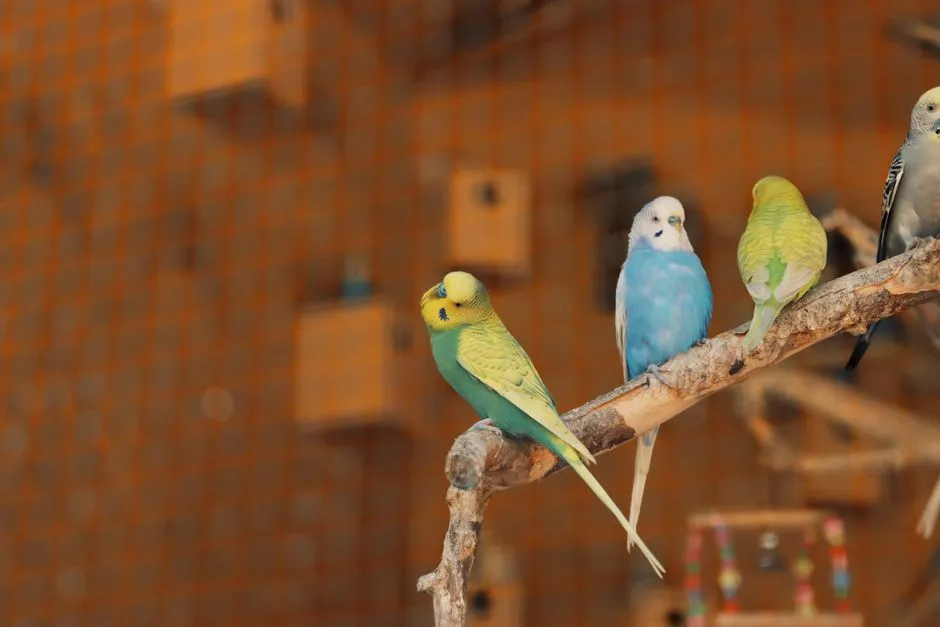
- What size cage does a parrot need?
- Start with the bird's wingspan, not a store label
- A conservative cage-size table by parrot type
- Bar spacing is the safety number you cannot ignore
- Measure the usable interior after furnishings
- Signs the cage is too small after setup
- Choose a rectangular cage and verify the build
- Account for the room around the cage
- One bird or two is a compatibility decision first
- Cage size connects to health, but does not diagnose illness
- A cage-buying checklist
What size cage does a parrot need?
A parrot cage should be at least 1.5 times the bird's full wingspan in width, depth, and height, with enough clear interior room to open and flap both wings without touching bars, bowls, perches, or toys. If the bird spends most of the day caged, use at least twice the wingspan in all three directions. Then compare that result with a current species table and choose the larger requirement in each dimension.
Bar spacing is a separate safety decision. The gap must be narrow enough that the individual bird cannot push its head between adjacent bars. Cage size cannot compensate for unsafe spacing.
This is a purchase floor, not an ideal life contained in three measurements. Merck Veterinary Manual says a cage must also accommodate multiple perches, play, climbing, toys, and foraging while preserving room for natural movement and exercise. Daily safe, supervised time outside the cage remains essential.
Start with the bird's wingspan, not a store label
The current Merck Veterinary Manual home-cage guidance uses at least 1.5 times wingspan in every direction. The RSPCA makes the time budget explicit: 1.5 times wingspan when a bird spends most of its time outside the cage, and twice the wingspan when it spends most of its time inside.
Do not restrain a bird and pull its wings open to obtain this number. Use a reliable species reference, ask an avian veterinarian, or measure a relaxed voluntary wing stretch only if it can be done without handling or frightening the bird. If the bird is between typical sizes, use the larger span.
For a bird with a 24-inch wingspan:
- 24 x 1.5 = 36 inches, so a short-stay cage begins at 36 x 36 x 36 inches.
- 24 x 2 = 48 inches, so a mostly-caged bird begins at 48 x 48 x 48 inches.
- If the current species table calls for a 60-inch height, keep 60 inches rather than reducing it to the formula's 36 or 48.
The formula uses clear interior dimensions. A 40-inch product width may include seed guards, handles, or a projecting frame. Measure inside the bars.
You will still see 24 x 24 x 24 inches or 24 x 24 x 30 inches offered as all-purpose starting points for small and medium birds. Those shortcuts are not a substitute for wingspan, species, time in the cage, and the space occupied by furnishings.
A conservative cage-size table by parrot type
Merck's current professional table lists 20 x 20 x 30 inches for a budgerigar, cockatiel, lovebird, or parrotlet; 36 x 24 x 48 for conures, Poicephalus parrots, caiques, and miniature macaws; 40 x 30 x 60 for African greys, Amazons, and small cockatoos; and 48 x 36 x 66 for macaws and large cockatoos. The buying floors below preserve those heights and round smaller width or depth figures upward to provide additional usable room.
| Parrot type | Example species | Conservative single-bird floor (W x D x H) | Spacing shopping filter |
|---|---|---|---|
| Small | Budgie, parrotlet, lovebird | 24 x 24 x 30 in | 3/8 to 1/2 in |
| Small-medium | Cockatiel | 24 x 24 x 30 in | 1/2 to 5/8 in |
| Medium | Green-cheek or sun conure, Quaker, Senegal, caique | 36 x 24 x 48 in | 1/2 to 5/8 in |
| Medium-large | African grey, Amazon, Eclectus, small cockatoo | 40 x 30 x 60 in | 5/8 to 3/4 in |
| Large | Large cockatoo, miniature or small-medium macaw | 48 x 36 x 66 in | 3/4 to 1 in |
| Extra large | Green-wing or blue-and-gold macaw | 48 x 36 x 66 in or larger | 1 to 1.5 in |
These dimensions assume one bird and do not overrule the wingspan calculation. Species labels cover individuals of different sizes, and sources group birds differently. The Merck minimum and bar-spacing table is a useful veterinary reference, but an avian veterinarian who knows the exact species and bird should resolve a borderline purchase.
The spacing ranges above are conservative shopping filters with smaller-bird divisions. The final test is not the name on the shelf card: the bird's head must not fit through the gap.
Bar spacing is the safety number you cannot ignore
Spacing that is too wide can allow a bird to push its head through, become trapped, strangle, or escape. The Association of Avian Veterinarians' basic-care guide states the controlling rule plainly: bar spacing should prevent the bird from fitting its head through.
- Small birds such as budgies, parrotlets, and lovebirds: 3/8 to 1/2 inch. Do not go wider than 1/2 inch for these birds.
- Cockatiels and many small conures: 1/2 to 5/8 inch.
- Conures, Quakers, Senegals, and Pionus: commonly 1/2 to 5/8 inch, confirmed against the individual bird.
- African greys, Amazons, Eclectus parrots, and many cockatoos: commonly 5/8 to 3/4 inch with bars strong enough for the beak.
- Larger cockatoos and small-to-medium macaws: commonly 3/4 to 1 inch.
- Large macaws: commonly 1 to 1.5 inches on a heavy-gauge enclosure built for that species.
Measure the clear gap between adjacent bars, not center to center. Check doors, feeder openings, play-top rails, and any place where the pattern changes; the widest gap controls the risk. Decorative curves can produce a larger opening than the regular grid.
If a bird can start to pass its head, reject the cage. Do not attempt a live fit test and do not add loose mesh or improvised wire. An avian veterinarian or experienced qualified cage supplier should confirm a borderline gap.
Bar thickness and weld strength matter too. A large parrot can bend light wire or break a weak weld. Horizontal bars on at least part of the enclosure support climbing, while secure species-appropriate latches reduce escapes. Include these checks on the new parrot supplies checklist.
Measure the usable interior after furnishings
An empty showroom cage can meet the tape measure and still fail once equipped. Sketch the cage from above and from the front, then place the fixed items on the sketch:
- Mark food and water bowls with doors fully closed.
- Mark the main sleeping perch and at least one additional perch of a different safe diameter and texture.
- Mark the swing, foraging toy, chew items, and any platform.
- Draw a clear wing-opening zone at the bird's normal perch height.
- Trace the route from the main perch to food, water, door, and lower level.
The bird should be able to turn, climb, and open both wings without its flight or tail feathers scraping the bars. Perches should not force the tail against the side or place droppings into food, water, or another perch. Toys should enrich the space without turning it into an obstacle course.
Keep a clear horizontal route. Width and depth usually deliver more usable movement than extra height alone because parrots move laterally between perches rather than flying straight upward in a narrow column. A tall, skinny cage is not equivalent to a wide cage with the same advertised volume.
Signs the cage is too small after setup
Watch the bird in the furnished enclosure, not only the empty product photo. The cage needs review when:
- both wings cannot open fully without touching bars or furnishings;
- wing or tail feathers remain bent, frayed, or pressed against the enclosure;
- the bird cannot turn normally on its main perches;
- bowls, perches, and toys leave no clear flapping or climbing space;
- movement is restricted to one repetitive route;
- the bird spends unusual time clinging to bars because usable perches or routes are poor.
Pacing, repetitive climbing, screaming, aggression, or feather damage can have medical, behavioral, social, and environmental causes. Do not diagnose “small cage” from one sign. Enlarge and improve the environment where needed, and involve an avian veterinarian when behavior changes persist or appear with physical symptoms.
Choose a rectangular cage and verify the build
Merck notes that most birds prefer rectangular cages because they provide corners. A rectangular footprint also makes it easier to establish distinct sleeping, feeding, and activity areas. Round and dome cages offer less straightforward usable width and make perch placement awkward, so skip them for a primary home.
Do not treat every round top as an automatic toe or beak trap; design defects must be assessed on the actual cage. Reject any enclosure, of any shape, with narrowing gaps, pinch points, sharp edges, broken welds, exposed wire ends, or openings that can catch a toe, beak, wing, or head.
For material, stainless steel is the clearest durable choice when budget allows. A sound bird-safe powder-coated cage can also work, but inspect the finish and obtain material information from the manufacturer. Reject rust, chipping or bubbling coating, unknown solder, and accessible hardware containing lead or zinc.
Merck's heavy-metal guidance for pet birds identifies lead and zinc as the most common heavy metals poisoning pet birds. It names metal cages as a frequent source, prefers stainless steel and welded wire made from safe alloys, and warns that galvanized wire or hardware can be a major zinc source. A label that says “metal” or “bird cage” is not enough; ask what the bars, coating, welds, fasteners, and replacement parts contain.
Check every door and latch. The main opening should allow the bird to enter and leave without tail or wing contact, and it should allow safe access for cleaning. Feeder doors need secure closures. A slide-out tray helps routine care only when removing it cannot open an escape route.
Account for the room around the cage
Measure the complete product footprint with doors, seed guards, play top, and tray in their operating positions. Leave room to remove bowls and the tray without shifting the occupied cage. Confirm the route through doorways, hallways, and stairs before buying.
A huge cage in a hazardous position is still hazardous. Keep it away from kitchens, smoke, aerosols, overheating, direct temperature swings, and drafts. The detailed cage-placement guide covers light, household traffic, windows, walls, sleep, and airborne hazards.
Plan a separate supervised play stand or safe flight area. RSPCA guidance calls for at least six hours of safe out-of-cage flight time each day for indoor-caged birds. Individual birds and households need an avian-vet-informed plan, especially when a bird is newly adopted, untrained, ill, disabled, or not yet safe to release in the room.
Turn off ceiling fans, close external doors and windows, cover collision hazards, remove other pets, and secure hot surfaces and water before the cage opens. Out-of-cage time is not useful if the room has not been made safe.
One bird or two is a compatibility decision first
Do not apply a generic “close to double the footprint” rule and assume two parrots can share. More space does not create compatibility. Birds can injure each other, and food, water, favored perches, and nest-like spaces can become contested.
The RSPCA limits group cage housing to colony-breeding species such as budgerigars, cockatiels, and lovebirds, with additional space based on group size. It advises against keeping more than one large non-colony parrot, such as an African grey, Amazon, cockatoo, or macaw, in one cage because fighting and injury are likely.
Start with separate appropriately sized cages. Ask an avian veterinarian or qualified behavior professional whether the exact birds are suitable for gradual introduction. Even bonded birds need duplicate feeding access, room to retreat, close observation, and an immediately available separate enclosure.
Cage size connects to health, but does not diagnose illness
Appropriate space, varied perches, foraging, climbing, play, and social contact support physical activity and psychological welfare. Merck's 2026 overview explains that solitary birds kept in small indoor cages with limited exercise can face physical and psychological consequences, and it treats cage size and enrichment as preventive-care concerns.
No cage substitutes for diet, interaction, safe exercise, and veterinary care. Contact an avian or exotics veterinarian promptly for a fluffed posture, tail bobbing, labored breathing, appetite loss, changed droppings, lethargy, weakness, unusual balance, or sitting on the cage floor. Birds may conceal illness; changing the cage is not treatment.
If lead or zinc exposure is possible, remove access and call an avian veterinarian promptly. Regurgitation, excessive thirst, weakness, loss of coordination, tremors, clenched feet, or seizures are among signs Merck lists for heavy-metal poisoning, but only a veterinarian can diagnose and treat it.
A cage-buying checklist
- Establish the bird's species and a reliable full wingspan without forced handling.
- Calculate 1.5 times wingspan in all directions, or twice wingspan for a mostly-caged bird.
- Compare that result with the current species table and keep the larger dimension each time.
- Measure the clear interior, excluding frames, guards, stands, and handles.
- Match every bar gap to the individual head-fit rule; inspect doors and decorative sections too.
- Lay out bowls, varied perches, foraging items, toys, and a clear wing-opening zone.
- Verify stainless steel or a documented bird-safe coating and safe alloys; reject lead, zinc, galvanized wire, rust, and damaged finish.
- Test welds, latches, feeder doors, the main door, and tray operation before the bird enters.
- Plan safe placement, cleaning access, a supervised play area, and the daily out-of-cage routine.
- For more than one bird, begin with separate cages and obtain species-specific compatibility guidance.
Buy from the inside out: wingspan, bar gap, clear furnished space, then the external footprint. The largest cage that passes every safety check is a better long-term purchase than a dramatic tower whose useful space disappears after two bowls and a perch.