Signs of a Sick Parrot: Early Warning Symptoms You Shouldn't Ignore
- How to Tell If Your Parrot Is Sick
- Why Parrots Hide Illness So Well
- Early Warning Signs You Should Never Ignore
- Reading the Droppings
- Breathing Problems: Treat These as Urgent
- Head, Eyes, Beak, and Feet
- Feathers and Skin
- Normal vs Worrying: A Quick Comparison
- When Is It an Emergency?
- What to Do Before and During the Vet Visit
- Building a Habit That Catches Illness Early
How to Tell If Your Parrot Is Sick
Parrots are prey animals, and instinct tells them to hide weakness. In the wild, a bird that looks ill is a target, so your parrot will act normal for as long as it possibly can. That survival reflex is exactly why a "sudden" illness is usually anything but sudden. By the time most owners notice something is wrong, the bird has often been unwell for days or longer.
The single most important early sign is a bird that sits fluffed up and quiet when it should be active, especially during daylight hours. Add any of the following and you should call an avian vet the same day: tail-bobbing with each breath, sitting on the cage floor, a drop in appetite, or a clear change in droppings. A parrot that stops eating can decline within 24 to 48 hours because of its fast metabolism, so with birds it is almost always better to be early than "sure."
This guide walks through the warning signs by body system, explains what is normal versus worrying, and tells you when a symptom is a true emergency. It is general education, not a diagnosis. Nothing here replaces a hands-on exam by a licensed avian or exotics veterinarian.
Why Parrots Hide Illness So Well
Understanding the "why" changes how closely you watch. Because masking is instinctive, subtle changes matter more in birds than in most pets. A dog will mope and slow down when it feels bad; a parrot will force itself to perch upright, preen, and eat in front of you, then collapse into rest the moment it thinks no one is looking.
Two practical takeaways follow from this:
- Observe from a distance. Watch your bird for a minute before it notices you, ideally through a doorway or reflection. The unguarded posture is the honest one.
- Know your bird's baseline. Normal weight, normal droppings, normal noise level, and normal activity are personal to each bird. You cannot spot a change if you never learned what "normal" looks like. A small digital kitchen scale that reads in grams is the most useful health tool most owners never buy.
Early Warning Signs You Should Never Ignore
These are the changes that most often show up first. Any one of them warrants a closer look; two or more together warrant a vet call.
Posture and Behavior
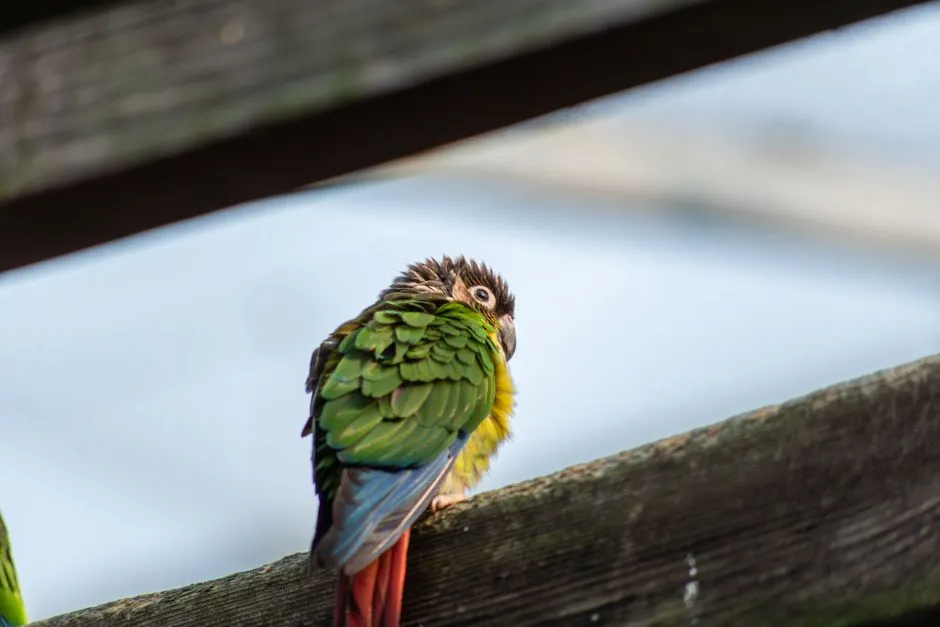
- Persistent fluffing. A quick fluff-and-shake is normal. A bird that stays puffed up like a ball for long stretches is usually trying to conserve heat because it feels unwell.
- Sitting low or on the cage floor. Healthy parrots perch up high. A bird on the floor, or one gripping the perch with both feet and looking hunched, is a red flag.
- Sleeping more, or sleeping during the day. Especially telling if the bird sleeps on two feet instead of tucking one up, or keeps its head tucked back for long daytime periods.
- Loss of interest. A normally chatty, playful bird that goes silent, stops foraging, or ignores favorite toys and people is signaling something.
- Balance problems. Wobbling, falling off the perch, or clinging to the bars can point to serious neurological or systemic illness.
Eating and Drinking
- Reduced appetite or dropping food without eating it. Because parrots eat frequently, even a day of poor eating is significant.
- Sudden weight loss. A drop of even a few grams in a small bird is meaningful. This is where the gram scale earns its keep, since a keel bone that feels sharp and prominent signals loss of muscle.
- Increased thirst or a sudden change in how much water disappears from the bowl.
- Regurgitation aimed at nothing. Courtship regurgitation toward a mirror, toy, or favorite person is normal. Repeated vomiting that flings mucus, sticks to the head feathers, or comes with lethargy is not.
Diet quality sits underneath a surprising share of avian illness, from fatty-liver disease to vitamin-A deficiency. If your bird lives mostly on seed, review our complete parrot diet guide to understand what a balanced plate looks like.
Reading the Droppings
Droppings are one of the clearest daily windows into a parrot's health, which is why experienced keepers glance at the cage paper every morning. A normal dropping has three parts: a firm green-to-brown feces portion, a white or cream urate portion, and a small amount of clear urine (liquid).
Color and consistency shift a little with diet. A bird eating beets or blackberries may pass reddish droppings; a bird eating lots of pellets often has more uniform brown output. Learn to separate diet-driven color from true warning signs.
| Sign in droppings | What it can suggest | Urgency |
|---|---|---|
| More liquid than usual (true diarrhea, not just extra urine) | Infection, diet change, stress, illness | Vet within 24–48 hrs if it persists |
| Very watery with little solid feces | Kidney issues, excess fruit, illness | Same-day vet if the bird also seems off |
| Yellow, green, or lime-colored urates | Possible liver disease | Prompt vet visit |
| Black or tarry feces | Possible digested blood in the gut | Emergency |
| Bright red blood in or around droppings | Bleeding, injury, illness | Emergency |
| Undigested seeds or food in droppings | Poor digestion, possible disease | Prompt vet visit |
| Far fewer droppings than normal | Not eating, or a blockage | Same-day vet |
A single odd dropping after a stressful car ride or a new food usually is not an emergency. A pattern that lasts more than a day, or any blood, is a reason to call.
Breathing Problems: Treat These as Urgent
Respiratory signs move quickly in birds and should always be taken seriously.
- Tail-bobbing in rhythm with breathing. When a bird works hard to breathe, its whole tail pumps with each breath. In a resting bird this is a serious sign.
- Open-mouth breathing or panting when the bird is not hot and has not just exercised.
- Clicking, wheezing, or raspy sounds, or a change in the voice.
- Tail-bobbing plus a fluffed posture and a runny or crusty nostril together suggest a respiratory infection.
- Discharge or staining around the nostrils (the cere) or matted feathers above the beak.
A parrot in visible respiratory distress is an emergency. Keep the bird warm, calm, and quiet, avoid any aerosols or fumes, and get to an avian or emergency exotic vet right away.
Head, Eyes, Beak, and Feet
Problems in these areas are easier to see up close during out-of-cage time.
- Eyes: swelling, redness, discharge, squinting, or a partly closed eye. Cloudiness or a change in how the bird tracks movement also warrants a look.
- Nostrils and cere: discharge, crusting, plugged nostrils, or a change in shape or color.
- Beak: overgrowth, unusual flaking, soft spots, or a change in how the upper and lower beak meet. Overgrowth itself can signal an underlying nutritional or liver problem.
- Feet and legs: lameness, swelling, sores on the bottom of the foot (bumblefoot), gripping with only one foot for long periods, or an inability to perch.
- Skin and cere color changes that appear without an obvious cause.
Feathers and Skin
Feather condition tells a longer-term story. A healthy parrot has smooth, bright, well-groomed plumage.
Some feather loss is completely normal. During a molt, birds shed and regrow feathers in a roughly symmetrical pattern, and you will see pin feathers coming in. What is not normal is bald patches, broken or chewed feathers, or a bird that obsessively over-preens one area. Sudden or patchy loss, bleeding feathers, or skin that looks red and irritated all deserve attention.
Because "is this a molt or a problem?" is such a common worry, we cover it in depth in why your parrot is losing feathers. Feather-destructive behavior can have medical roots, behavioral roots, or both, so it is worth ruling out illness first.
Normal vs Worrying: A Quick Comparison
| Behavior | Usually normal | Worth worrying about |
|---|---|---|
| Fluffing | Brief fluff-and-shake, then back to activity | Staying puffed up and quiet for long periods |
| One foot up | Resting on one foot while alert | Gripping with both feet, hunched, on the floor |
| Regurgitation | Bobbing to a mate, toy, or person | Vomiting mucus onto head feathers, with lethargy |
| Feather loss | Symmetrical molt with pin feathers | Bald patches, chewed feathers, bleeding, over-preening |
| Napping | Short daytime naps, active otherwise | Sleeping much of the day, head tucked, eyes closed |
| Droppings | Slight color shift from a new food | Blood, black/tarry, or persistent watery output |
| Appetite | Skipping one snack it never liked | Refusing normal food, dropping weight |
When in doubt, treat the worrying column as a reason to call, not a reason to wait and watch for another day.
When Is It an Emergency?
Some signs mean "today," and some mean "right now." Seek immediate care, including an after-hours emergency exotic vet if needed, for any of these:
- Labored breathing, open-mouth breathing, or tail-bobbing at rest
- Bleeding that will not stop, or a broken blood feather
- Fresh red blood or black, tarry droppings
- A fall, an animal bite, or any suspected trauma
- Sitting on the cage floor and unable to perch, or seizures and loss of balance
- Not eating at all for more than a few hours in a small bird
- Suspected exposure to fumes (nonstick cookware overheating, smoke) or a toxic food
Because parrots hide illness so effectively, a bird that finally looks sick is often quite sick. Err toward the emergency visit.
What to Do Before and During the Vet Visit
Acting calmly and quickly gives your bird the best odds.
- Keep the bird warm and stable. A sick parrot struggles to hold body heat. Many vets suggest a warm, quiet, draft-free spot around 80–85°F (27–29°C) while you arrange care. Never force-feed or give water to a bird that is weak or struggling to breathe.
- Reduce stress. Dim the lights, limit handling, and keep noise low. Cover part of the cage or carrier to help the bird feel secure.
- Bring evidence. Photograph or bag a fresh dropping, note when eating changed, and record the bird's recent weight if you have it. Details help the vet move fast.
- Call ahead. Not every clinic treats birds. Confirm the practice sees avian patients, or ask for the nearest one that does.
- Do not medicate on your own. Human medications, over-the-counter bird "tonics," and internet dosages can be dangerous and can mask the very signs your vet needs to see. Leave diagnosis and treatment to the professional.
If you do not already have an avian vet, find one before you need one. Our guide on how often a parrot should see a vet explains routine wellness exams and how they catch problems while they are still small and treatable.
Building a Habit That Catches Illness Early
The owners who catch problems early are not luckier; they are more observant. Build a simple daily rhythm:
- Glance at the droppings on fresh cage paper each morning.
- Watch the bird unobserved for a minute to check posture and breathing.
- Weigh weekly on a gram scale, ideally at the same time of day, and log it.
- Note appetite and behavior so a change stands out.
None of this takes more than a couple of minutes, and it turns you into your parrot's most reliable early-warning system. Pair sharp observation with a balanced diet and regular wellness exams, and you give your bird the best possible chance at the long, healthy life it is built for.
This article is general educational information about pet-bird care. It is not veterinary advice and does not replace examination, diagnosis, or treatment by a licensed avian or exotics veterinarian. If your bird shows any sign of illness, contact an avian vet promptly and never use online content to delay professional care.