Parrot Body Language: How to Read What Your Bird Is Telling You
- Parrot Body Language, Decoded
- Read the Whole Bird, Not One Body Part
- Eyes: Pinning, Shape, and Blinking
- Feathers: The Fastest Mood Barometer
- Wings, Tail, and Feet
- Putting It Together: Happy, Curious, Scared, and Angry
- Why Reading Body Language Prevents Bites and Screaming
- How to Get Better at Reading Your Bird
- When Body Language Signals a Health Problem
Parrot Body Language, Decoded
Your parrot is talking to you constantly, just not in words. It speaks with its eyes, feathers, wings, beak, and posture, and it does so in real time, several signals a second. Learn to read those signals and you can tell the difference between a bird that wants a head scratch and one that is a heartbeat away from biting. As a general rule of thumb, the fastest, most reliable clues come from three places: the eyes (pinning and shape), the feathers (sleeked flat or fluffed loose), and the body's overall tension (relaxed and rounded versus stiff and tall). Read those together, in context, and most "unpredictable" parrot behavior stops being a mystery.
Body language is also the single best bite-prevention tool you have. Parrots almost always warn before they bite; people just miss the warning. This guide walks through the signals head to tail, what they usually mean, and how to respond so you build trust instead of fear.
Read the Whole Bird, Not One Body Part
The most common mistake owners make is reading a single feature in isolation. Pinning eyes can mean excitement, curiosity, or aggression depending on what the rest of the body is doing. A fluffed bird might be relaxed and content, or it might be cold, or it might be sick. Meaning lives in combinations and context.
Before you interpret anything, take a two-second inventory:
- Eyes — round and soft, or pinning (pupils flashing large to small)?
- Feathers — sleeked tight to the body, relaxed, or puffed up?
- Wings — folded neatly, drooped, flipping, or raised away from the body?
- Tail — still, wagging, fanned, or bobbing?
- Posture — loose and rounded, or tall, stiff, and leaning toward you?
- Beak — quiet, grinding, clicking, or open and lunging?
- Context — what just happened? New person, new object, hormonal season, tired, hungry?
A relaxed, rounded bird with soft eyes and a grinding beak is a happy bird. That same fluff paired with a hunched posture and closed eyes at 2 p.m. is a bird you should watch closely for illness. The features are the words; context is the grammar.
Eyes: Pinning, Shape, and Blinking
A parrot's eyes are one of its most expressive tools, and because many parrots can control their pupils voluntarily, the eyes give you fast, honest information.
Eye Pinning (Flashing)
Eye pinning is the rapid dilation and contraction of the pupil, so the black center flashes large then pin-small. It signals high arousal or intense focus and is emotionally neutral on its own. The surrounding body language tells you which emotion:
- Pinning + relaxed posture + a favorite food or toy = excitement and interest.
- Pinning + a fixed stare + raised nape feathers + tail fanning = overstimulation or aggression, and often a warning before a bite.
When you see pinning, freeze and check the rest of the bird before you reach in. If you want the fuller picture on what pinning means, note that it is one of the clearest "read the whole bird" signals there is.
Eye Shape and Blinking
- Soft, round eyes with relaxed lids signal a calm, comfortable bird.
- Slow blinking is a low-key sign of contentment and trust, a little like a cat's slow blink.
- A hard, wide, unblinking stare paired with a still body usually means the bird is locked on and tense. Give it space.
Feathers: The Fastest Mood Barometer
Feather position changes in a fraction of a second and is one of the easiest signals to read once you know what you are looking at.
| Feather signal | What it usually means | What to do |
|---|---|---|
| Sleeked tight to body, thin-looking | Fear, alarm, or readiness to flee | Stop, lower your energy, back off |
| Relaxed, slightly loose | Calm and comfortable | Carry on, good time to interact |
| Full-body fluff then a shake-off ("rouse") | Resetting, contentment, transition | Nothing needed, it's a good sign |
| Sustained puffed ball, especially eyes closed, tail bobbing | Possibly cold or unwell | Check warmth; watch for illness signs |
| Raised nape/crest + fanned tail + stiff body | Threat display, "back off" | Do not reach in; give space |
| Crest raised (cockatiels, cockatoos) | Alert, curious, startled, or excited | Read posture to tell which |
Two feather signals deserve special attention:
- A quick fluff-and-shake ("rousing") is the bird resetting its feathers, usually a sign of a relaxed transition between activities. Very reassuring to see.
- A sustained, all-over puff that does not resolve, especially with a hunched posture, closed or squinty eyes, tail-bobbing with each breath, or sitting on the cage floor, can be a sign of a sick bird. Parrots hide illness until they are seriously unwell, so a bird that stays fluffed and quiet for hours warrants a call to an avian or exotics vet rather than a wait-and-see.
Crest Language in Cockatiels and Cockatoos
Crested parrots wear part of their mood on their heads. A crest held flat and sleek against the head signals fear or aggression, and often comes with hissing. A crest held straight up means alert, startled, or intensely curious. A crest held in a relaxed, gently angled position is the neutral, content default. Watch a cockatiel for an afternoon and you can practically read it like a mood ring.
Wings, Tail, and Feet
Wing Signals
- Wing flipping or flicking can signal irritation, a feather that will not settle, or a "come here"/excited flutter. Read the context and the eyes.
- Wing drooping briefly after a bath or during warm weather is normal thermoregulation. Persistent drooping in a fluffed, quiet bird is a reason to watch for illness.
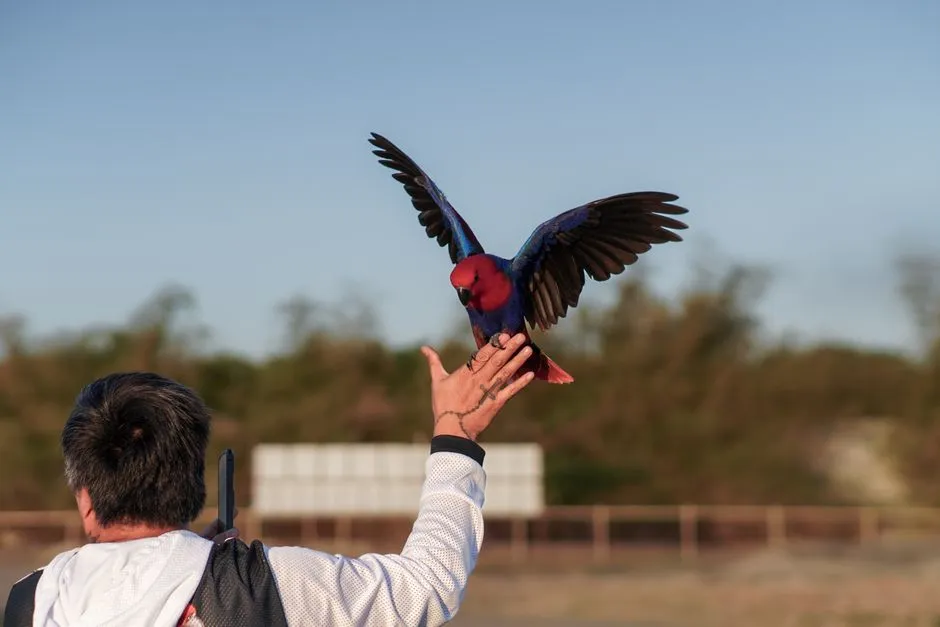
- Wings raised out and away from the body (sometimes with a slight quiver) is often a display or stretch. A full both-wings-up-and-back stretch is a relaxed, contented gesture.
- A one-sided stretch — one wing and the leg on the same side extended together — is a classic comfort behavior and a good sign the bird feels safe.
Tail Signals
- Tail wagging (a quick side-to-side flick) frequently signals happiness or greeting, and often marks a transition, a bird settling after a task, much like a dog's contented wag.
- Tail fanning spreads the tail wide and, combined with a stiff body and raised feathers, is part of a threat or display posture.
- Tail bobbing — the whole tail pumping in time with breathing — is important. After vigorous play or flight it is normal recovery. At rest, persistent tail-bobbing indicates labored breathing and is a red flag that warrants prompt evaluation by an avian vet.
Beak and Feet
- Beak grinding — a soft grinding of the upper and lower beak, usually at bedtime — is a lovely sign of a relaxed, content bird settling in to sleep.
- Beak clicking (a single sharp click) can be a "look at me" or a mild territorial warning depending on tone and posture.
- Regurgitating for you — a head-bobbing motion bringing up food — is a sign of affection and bonding, however unappealing it looks to us.
- Beak wiping on a perch often just means cleaning after eating, but repeated hard wiping can signal irritation.
- Foot tapping (especially in cockatoos) can be a territorial "this is mine" display.
- Standing on one foot with a relaxed body and puffed cheeks is a resting, comfortable bird.
Putting It Together: Happy, Curious, Scared, and Angry
Here is how the individual signals combine into the four states owners most want to identify.
A Happy, Relaxed Parrot
Soft round eyes, relaxed or gently fluffed feathers, beak grinding, a one-sided stretch, tail wags, playing with toys, and talking or singing to itself. This is a bird that feels safe. It is a great time for gentle interaction and training.
A Curious or Excited Parrot
Bright eyes that may pin, a raised crest, leaning toward the object of interest, a loose, bouncy body, and sometimes wing flipping. Excitement is high energy but not hostile. Watch the intensity, though, because an overexcited parrot can tip into overstimulation and a nip surprisingly fast.
A Scared or Stressed Parrot
Feathers sleeked flat and tight, a thin "slicked-down" silhouette, eyes wide, leaning away from you, backing into a corner, or rapid escape attempts. A stressed bird may also freeze completely. The right response is to stop, soften your body, lower your voice, and give space. Pushing a frightened bird destroys trust and teaches it that biting is the only thing that makes you back off.
An Angry or Overstimulated Parrot
A stiff, tall posture, hard pinning eyes, raised nape and head feathers, a fanned tail, an open beak, lunging, hissing, or foot tapping. This is the clearest "do not touch" signal a parrot gives. Reaching in now is how people get bitten. Because parrots warn before they bite, learning to spot this cluster is the heart of stopping a parrot from biting before it starts.
Why Reading Body Language Prevents Bites and Screaming
Almost every bite has a run-up: pinning eyes, a stiffening body, feathers rising, a subtle lean. When owners miss those and reach in anyway, the bird learns that soft warnings do not work and escalates straight to biting next time. Respect the early signals and you teach your parrot that it can trust you to listen, which lowers both biting and defensive behavior over time.
The same reading skill helps with noise. A bird ramping toward an overstimulated, frustrated state often telegraphs it in its body before the volume climbs. Catching that early and redirecting to a foraging toy or a calm break can head off a session of problem screaming. Body language is preventive, not just diagnostic.
How to Get Better at Reading Your Bird
Reading parrot body language is a skill that improves fast with deliberate attention:
- Watch during calm moments. Spend ten minutes a day simply observing your bird doing nothing in particular. You will learn its relaxed baseline, which makes deviations obvious.
- Name signals out loud. "Eyes pinning, tail fanning, that's a back-off." Verbalizing builds the pattern-recognition habit.
- Respect the "no" every time. When your parrot signals it wants space, honor it. Consistency here is the foundation of trust and is central to building a bond with a new bird.
- Learn your species' quirks. Cockatiels crest, cockatoos foot-tap and display, conures can be intense, budgies chatter. Each species has dialect on top of the shared grammar.
- Note the context every time. Time of day, season (hormonal springs make many parrots touchier), hunger, and fatigue all shift the meaning of the same signal.
When Body Language Signals a Health Problem
Most body language is behavioral, but a few postures are medical. Because parrots instinctively mask illness, these signs mean a bird is likely already unwell and needs prompt attention rather than observation:
- Sustained fluffed, puffed posture that does not resolve
- Tail-bobbing or labored breathing while at rest
- Sitting on the cage floor, or perching low and hunched
- Closed or squinty eyes during the day, general lethargy
- Loss of appetite or noticeable changes in droppings
If you see these, treat it as urgent and contact a licensed avian or exotics veterinarian. This guide is general education about behavior and communication, not veterinary advice, and it does not replace an exam by a professional who can actually assess your bird. When something looks off and you are not sure, err toward calling the vet.
The payoff for learning your parrot's language is a calmer, more cooperative bird and a relationship built on being understood. Watch closely, respond honestly, and your parrot will keep telling you exactly what it needs.